

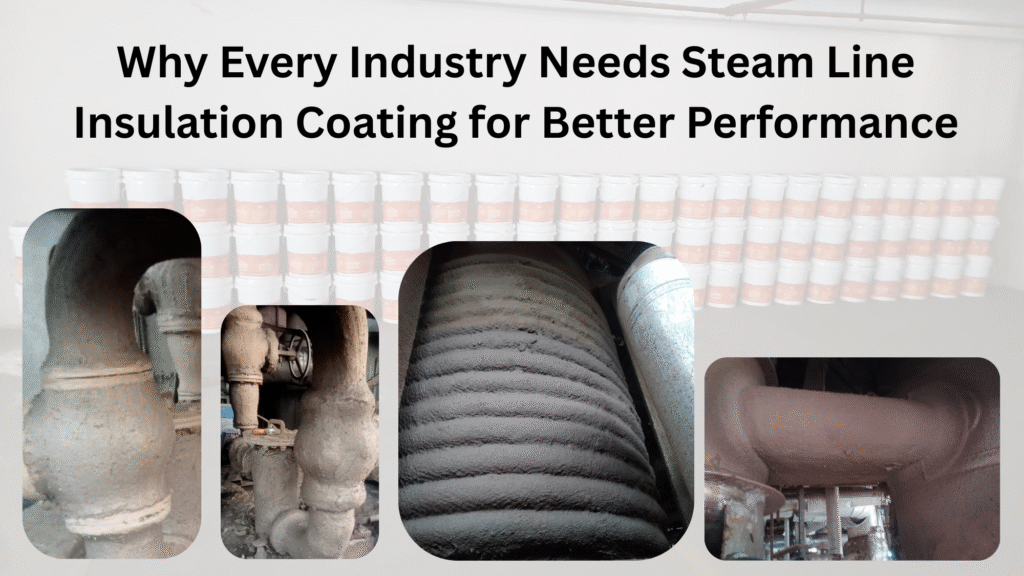
Introduction
In today’s energy-conscious world, industries are under constant pressure to improve efficiency, reduce operational costs, and meet sustainability goals. One of the most overlooked yet critical aspects of industrial performance lies in how effectively heat is managed—especially within steam systems. Steam is the backbone of countless industrial processes, from generating power to heating, cleaning, and driving mechanical operations. However, when steam lines are left unprotected or poorly insulated, they become a major source of energy loss and inefficiency.
This is where steam line insulation coatings come into play. These innovative coatings provide a modern, cost-effective, and highly efficient solution for thermal management. Unlike bulky traditional insulation, they form a thin, protective layer that minimizes heat loss, enhances safety, and boosts equipment longevity. For industries looking to optimize performance and cut energy waste, steam line insulation coatings are not just an option—they’re a necessity.
Understanding Steam Line Insulation Coating
A steam line insulation coating is a specialized, high-performance thermal barrier designed to insulate steam-carrying pipes and equipment. It helps retain heat within the system, reduces energy consumption, and protects metal surfaces from corrosion and condensation.
Unlike traditional insulation materials such as fiberglass, mineral wool, or calcium silicate, insulation coatings are applied as a liquid paint-like layer that hardens to form a seamless, durable thermal shield. These coatings can be sprayed, brushed, or rolled onto complex surfaces—making them suitable for irregularly shaped pipes, valves, and joints that are otherwise difficult to insulate.
The secret lies in their advanced formulation, often containing ceramic microspheres, aerogels, or reflective polymers. These components create micro air pockets that reflect radiant heat while limiting conductive heat transfer. The result is an ultra-thin, high-performance coating capable of reducing surface temperatures by up to 40–60%.
In addition to thermal benefits, steam line insulation coatings provide excellent UV resistance, weather protection, and corrosion prevention, making them ideal for both indoor and outdoor applications. They represent the evolution of insulation technology—offering efficiency, simplicity, and durability in a single solution.
The Role of Steam Lines in Industrial Operations
Steam is one of the most versatile and efficient energy carriers used across industries. In power generation, it drives turbines to produce electricity. In refineries and petrochemical plants, steam plays a crucial role in distillation and processing. Food and beverage industries use steam for sterilization and cooking, while textile and pharmaceutical sectors depend on it for heating and manufacturing processes.
However, these steam lines often operate under extreme temperatures—sometimes exceeding 200°C or more. Without proper insulation, a significant amount of this heat escapes into the environment. Studies have shown that uninsulated steam lines can lose up to 25–30% of their energy output, directly impacting efficiency and increasing operational costs.
Beyond energy waste, this also leads to higher emissions and reduced sustainability. Therefore, maintaining optimal insulation across steam networks isn’t just about saving energy—it’s about ensuring consistent performance, worker safety, and environmental compliance.
The Problems Caused by Poor Insulation
Neglecting proper insulation in steam systems can lead to a cascade of problems—many of which directly impact productivity, safety, and maintenance budgets.
1. Heat Loss and Rising Energy Costs
Uninsulated or poorly insulated steam lines radiate massive amounts of heat. This not only wastes energy but also forces boilers to work harder, leading to higher fuel consumption and operating costs.
2. Safety Hazards
Exposed high-temperature surfaces pose a serious burn risk to workers. In facilities with dense piping networks, maintaining safe surface temperatures is essential to comply with industrial safety standards.
3. Corrosion and Condensation
Temperature fluctuations can cause condensation to form on unprotected surfaces, leading to corrosion under insulation (CUI). Over time, this degrades the pipeline, leading to leaks, equipment failure, and expensive downtime.
4. Maintenance Burden
Traditional insulation materials can trap moisture, degrade over time, or get damaged during routine inspections. Reinsulating is labor-intensive and costly, especially for large industrial setups.
According to energy audits, industries can lose thousands of dollars annually per kilometer of uninsulated steam piping. Clearly, poor insulation is more than an inconvenience—it’s a financial drain.
How Steam Line Insulation Coating Solves These Problems
Steam line insulation coatings address all these challenges head-on by offering a smart, durable, and easy-to-apply alternative to traditional insulation.
Superior Thermal Efficiency
These coatings significantly reduce surface temperatures and minimize heat loss. Their reflective and insulating properties ensure that heat remains within the system—maximizing energy utilization and process stability.
Corrosion Protection
The coating forms a moisture-resistant barrier that prevents condensation buildup, thereby eliminating corrosion under insulation (CUI). This ensures longer pipeline life and reduces replacement frequency.
Easy Maintenance & Application
Since it’s applied like paint, there’s no need to dismantle equipment or wrap pipes. This drastically reduces downtime and maintenance costs. Plus, it can be reapplied as needed without removing old layers.
Cost-Effective Longevity
Steam line insulation coatings provide long-term returns on investment through energy savings, reduced maintenance, and improved system reliability. Over time, these benefits outweigh the initial installation cost.
By addressing heat loss, corrosion, and maintenance simultaneously, insulation coatings offer a complete performance upgrade for any steam system.
Key Benefits for Industrial Performance
Energy Efficiency and Cost Reduction
By cutting down radiant heat loss, steam line insulation coatings enhance overall energy efficiency. Plants can lower fuel consumption, reduce emissions, and achieve significant cost savings over time.
Extended Equipment Life
Coatings protect metal surfaces from corrosion and thermal fatigue, extending the operational life of steam lines and equipment.
Worker Safety and Heat Protection
The coatings reduce external surface temperatures to safer levels, minimizing burn risks and helping facilities maintain safety compliance.
Reduced Maintenance Downtime
Traditional insulation requires frequent replacement or repair, but coatings are durable and easy to maintain. This minimizes operational interruptions and labor costs.
Environmental and Sustainability Benefits
Less heat loss means lower fuel consumption, which directly translates to reduced greenhouse gas emissions. Adopting steam line insulation coatings supports green manufacturing and ESG (Environmental, Social, and Governance) goals.
Industry Applications
Steam line insulation coatings are versatile and applicable across numerous sectors:
- Power Generation: Helps maintain boiler efficiency and reduce heat loss across turbine lines.
- Petrochemical and Refineries: Prevents condensation and corrosion in high-temperature, high-pressure systems.
- Food and Beverage: Maintains process temperature consistency during sterilization and cooking.
- Textile Industry: Reduces steam wastage in drying and finishing lines.
- Pharmaceuticals: Ensures precision in heating processes critical for product consistency.
- Manufacturing Plants: Enhances energy performance across process steam and HVAC systems.
From small manufacturing units to large-scale power plants, every industry that relies on steam can benefit from these coatings’ protective and energy-saving properties.
Steam Line Insulation Coating vs. Traditional Insulation
| Parameter | Traditional Insulation | Steam Line Insulation Coating |
| Installation | Bulky, time-consuming | Simple, paint-like application |
| Durability | Degrades, absorbs moisture | Long-lasting, weather-resistant |
| Thermal Efficiency | High, but limited by thickness | Comparable performance with thin layer |
| Maintenance | Requires frequent checks | Minimal upkeep needed |
| Safety | Prone to damage and moisture retention | Seamless and protective surface |
| Cost Over Time | High due to repairs and downtime | Low with long-term ROI |
In short, insulation coatings combine the efficiency of traditional insulation with the practicality of modern engineering, offering a sustainable upgrade for industrial systems.
Choosing the Right Steam Line Insulation Coating
Selecting the right coating depends on a few critical factors:
- Operating Temperature: Ensure the coating can handle the maximum surface temperature of your steam lines.
- Surface Type and Condition: Clean, rust-free surfaces ensure better adhesion and longevity.
- Environmental Exposure: Outdoor lines require coatings with UV and weather resistance.
- Certifications and Standards: Look for coatings that meet ASTM and ISO standards for industrial safety and performance.
ALTIC Paints stands out as a trusted name in industrial protection solutions. Their high-performance steam line insulation coatings are engineered to deliver unmatched thermal control, corrosion resistance, and longevity—helping industries achieve top-tier operational performance.
Conclusion
In a competitive industrial landscape where every watt of energy and every hour of uptime matters, steam line insulation coating is more than just a protective layer—it’s a performance enhancer. By minimizing heat loss, improving safety, and extending equipment life, these coatings play a vital role in creating efficient, sustainable, and cost-effective industrial systems.
For industries aiming to reduce operational costs, improve safety, and meet sustainability standards, the choice is clear: invest in steam line insulation coating and unlock better performance across your operations.
ALTIC Paints continues to lead the way with innovative insulation technologies—empowering industries to stay efficient, safe, and future-ready.
Pingback: Top Benefits of Using Steam Line Insulation Coatings in High-Temperature Systems - alticpaint.com