

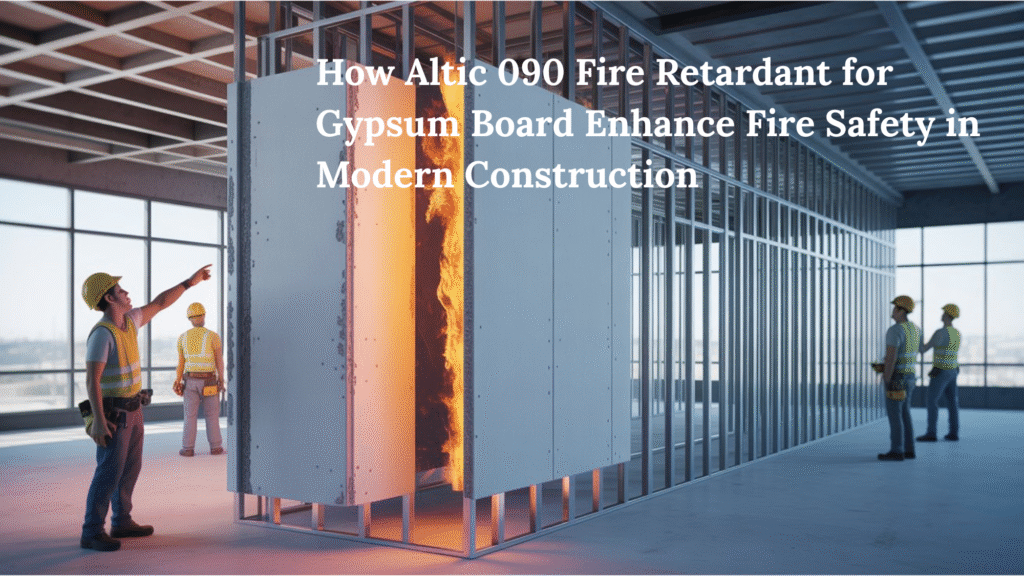
🔥Introduction: Building Safer Spaces with Fire-Resistant Gypsum Boards
In modern architecture, fire safety in construction is no longer optional — it’s essential. As cities rise higher and spaces become denser, ensuring the safety of occupants during a fire has become a top priority for builders, architects, and engineers. Among the many fireproof building materials available today, one stands out for its effectiveness, versatility, and cost-efficiency — gypsum boards.
Used extensively in wall systems, ceilings, and partitions, Fire-Resistant gypsum boards have become the unsung heroes of modern building safety solutions. Their ability to resist heat, slow fire spread, and maintain structural stability makes them a key element in creating safer environments.
This article explores how gypsum boards enhance fire safety in modern construction, diving deep into their science, applications, and benefits — and why they’re the go-to choice for sustainable, fire-safe architecture.
🧱 Understanding Gypsum Boards
What Are Gypsum Boards?
Gypsum boards, commonly known as drywall or plasterboard, are flat panels made primarily of gypsum (calcium sulfate dihydrate) sandwiched between layers of heavy paper. They are widely used as an interior wall and ceiling material due to their smooth finish, lightweight nature, and easy installation.
Composition and Core Properties
The key ingredient, gypsum, contains water molecules within its crystalline structure — known as “water of crystallization.” When exposed to heat, these water molecules are gradually released as steam, helping to absorb heat and slow fire spread. This unique property makes gypsum inherently fire-resistant.
Types of Gypsum Boards
There are several types of gypsum boards designed for specific purposes:
- Regular Gypsum Board: Used for standard interior applications.
- Moisture-Resistant Gypsum Board: Ideal for humid areas like bathrooms and kitchens.
- Fire-Resistant Gypsum Board (FR Boards): Engineered with glass fibers and additives that improve strength and fire resistance.
Why Gypsum Is Naturally Fire-Resistant
When fire attacks a gypsum board, the material undergoes an endothermic reaction, meaning it absorbs heat energy. As the gypsum releases its water vapor, it forms a protective barrier that helps prevent heat transfer to the other side. This unique property helps maintain wall integrity and delays structural collapse — a critical factor during fire emergencies.
🔬 The Science Behind Fire Resistance
How Gypsum Fights Fire
The fire resistance in gypsum boards primarily comes from its water content. When subjected to high temperatures, the water molecules within gypsum are released as steam through a process called calcination. This reaction absorbs a significant amount of heat, thereby reducing the temperature on the exposed surface.
The Thermal Barrier Effect
As the board dehydrates, it creates a protective layer of anhydrous gypsum (calcium sulfate), which acts as a thermal barrier. This barrier slows the spread of flames and prevents the rapid heating of structural elements like steel and concrete behind the wall.
Fire Endurance and Testing Standards
Fire-resistant gypsum boards are tested based on fire endurance ratings. Common tests include ASTM E119, BS 476, and IS 1182, which measure how long a wall or ceiling assembly can withstand fire before failing.
- Standard Fire-Rated Drywall: Can typically resist fire for up to 30 minutes.
- Enhanced Fire-Resistant Systems: Can offer 60 to 120 minutes or more of protection when used in multi-layer assemblies.
Example
A typical fire-rated drywall system with double-layered gypsum boards can maintain its structure for up to 2 hours — providing valuable time for evacuation and firefighting efforts.
🏗️ Fire Safety Applications in Modern Construction
Residential Buildings
In homes and apartments, fire-resistant gypsum boards are often used in wall partitions, ceilings, and shaft walls. They provide a crucial layer of protection between rooms, helping to contain fires and protect families.
Commercial and Office Spaces
In offices, malls, and hospitals, fire-rated drywall helps compartmentalize fire zones, preventing flames from spreading through open spaces or service ducts. The lightweight nature of gypsum boards also makes them ideal for suspended ceilings and quick retrofitting.
Industrial and Infrastructure Projects
In factories and data centers, gypsum boards are integrated into fire-resistant wall systems to protect critical areas like electrical rooms, staircases, and escape corridors. Their non-combustible nature ensures compliance with safety regulations while maintaining design flexibility.
Integration in Building Systems
Gypsum boards can be combined with steel framing, insulation layers, and fireproof coatings to create comprehensive fire barriers. They are also used to encase steel beams and columns, enhancing the overall fire rating of the structure.
Compliance with Global Fire Safety Standards
Fire-resistant gypsum boards comply with major safety codes, including:
- ASTM E84 & E119 (U.S. Standards)
- BS 476 Part 4 & 7 (British Standards)
- IS 1182 & IS 2095 (Indian Standards)
These certifications assure that gypsum-based systems meet the strictest requirements for fire safety in construction worldwide.
💪 Benefits of Using Fire-Resistant Gypsum Boards
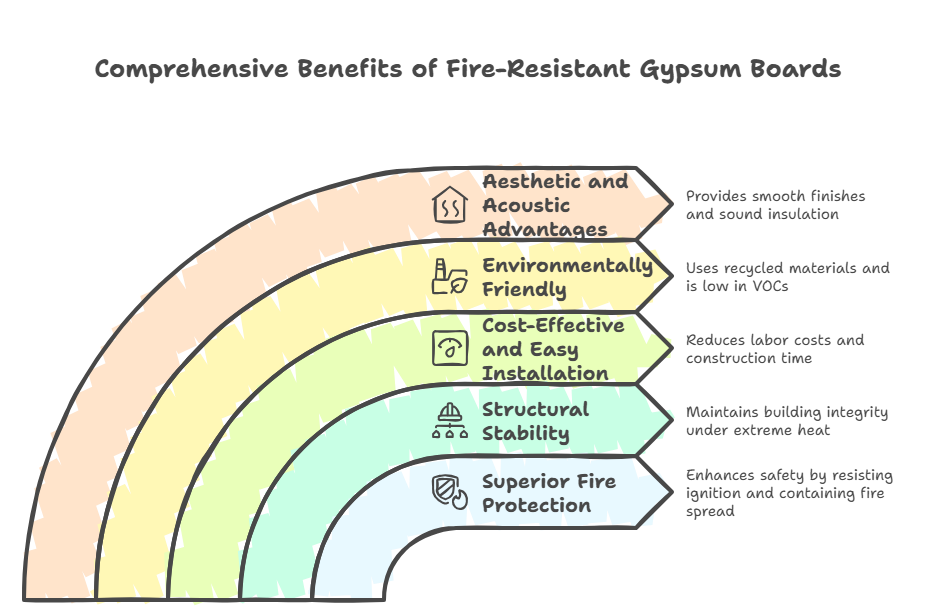
1. Superior Fire Protection
The most significant advantage is enhanced fire safety. Gypsum boards resist ignition, contain fire spread, and protect the structural framework, giving occupants more time to escape and responders more time to act.
2. Structural Stability
Even under extreme heat, gypsum boards retain integrity longer than conventional materials. This helps maintain building stability, reducing the risk of collapse during a fire.
3. Cost-Effective and Easy Installation
Compared to other fireproof materials like cement boards, gypsum is lightweight, easy to cut, and quick to install. This reduces labor costs and construction time without compromising performance.
4. Environmentally Friendly
Gypsum is a naturally occurring mineral, and modern boards often use recycled paper liners. Additionally, they are low in volatile organic compounds (VOCs), making them eco-friendly and safe for indoor environments.
5. Aesthetic and Acoustic Advantages
Beyond safety, gypsum boards provide a smooth surface finish and can be painted, textured, or laminated. They also offer excellent sound insulation, creating comfortable and quiet interiors.
⚖️ Gypsum Boards vs. Other Fireproof Materials
| Material | Fire Resistance | Weight | Cost | Installation | Eco-Friendliness |
| Gypsum Board | High (up to 2 hours) | Light | Affordable | Easy | High |
| Cement Board | High | Heavy | Costly | Harder | Moderate |
| Plaster | Moderate | Medium | Low | Labor-Intensive | Moderate |
| Mineral Wool | Very High | Medium | High | Moderate | High |
While cement boards and mineral wool provide strong fire resistance, gypsum boards strike the best balance between cost, performance, and practicality. Their ability to integrate seamlessly into both residential and commercial projects makes them the preferred choice for modern architects and engineers.
🏁 Conclusion: Building a Safer Tomorrow
In the evolving world of modern construction, ensuring fire safety is both a moral and structural necessity. Fire-resistant gypsum boards offer an intelligent, economical, and efficient way to meet these safety demands without compromising on design or performance.
By slowing fire spread, maintaining integrity, and protecting occupants, gypsum boards embody the future of fireproof building materials. For architects, engineers, and builders aiming to design with safety and sustainability in mind, choosing fire-rated gypsum boards is a step toward building safer, stronger, and smarter structures.
➡️ Prioritize safety — build with fire-resistant gypsum boards.
❓ FAQs
Q1. Are gypsum boards completely fireproof?
No. Gypsum boards are fire-resistant, not fireproof. They delay the spread of fire and heat but will eventually degrade after prolonged exposure.
Q2. How long can fire-resistant gypsum boards withstand fire?
Depending on the type and thickness, they can resist fire for 30 to 120 minutes or more in tested wall assemblies.
Q3. Can gypsum boards be used in kitchens or wet areas?
Yes, but it’s best to use moisture- and fire-resistant gypsum boards in such areas for added protection.
Q4. What certifications should I look for?
Look for products tested under ASTM E119, BS 476, or IS 1182 to ensure compliance with fire safety standards.